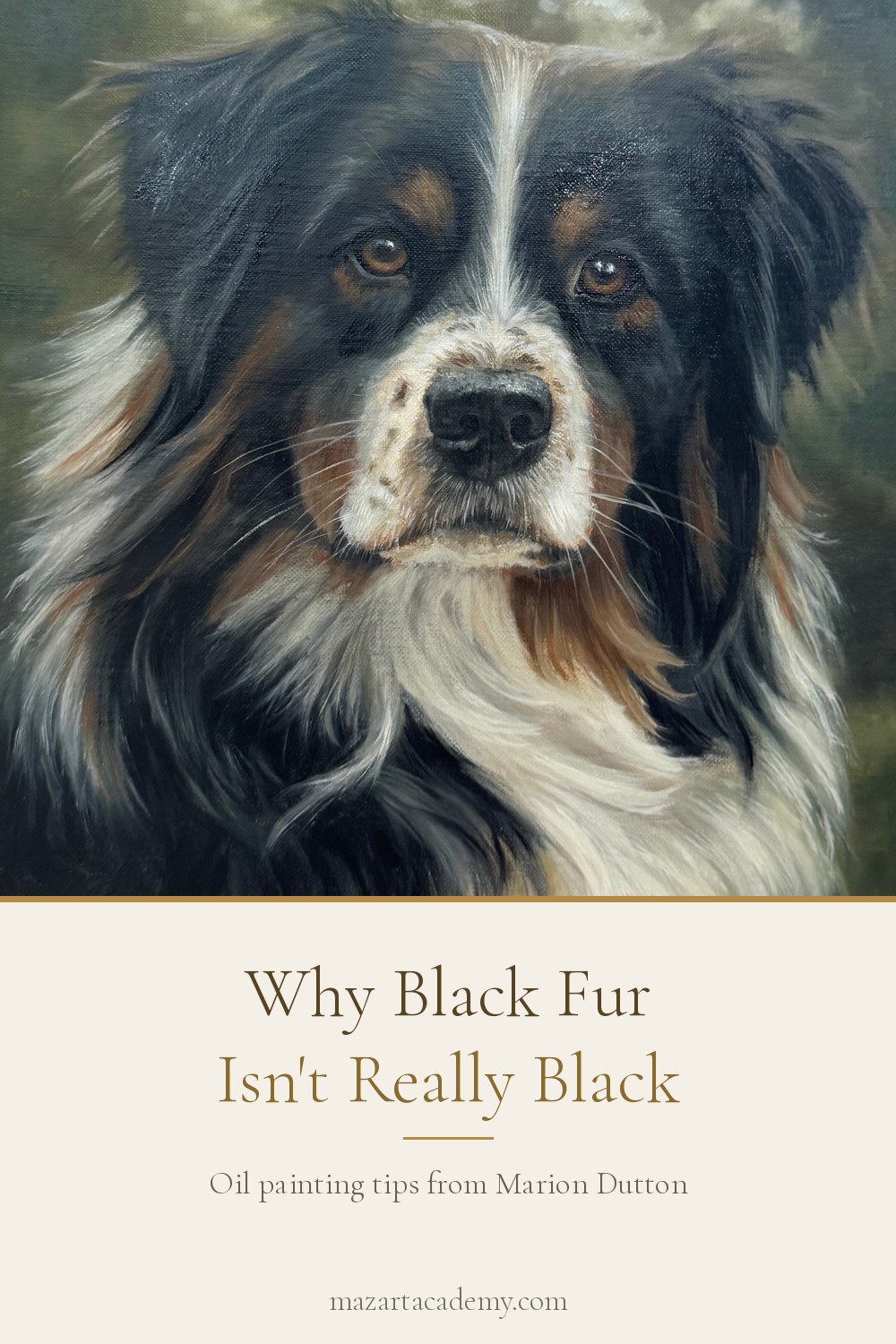
Why Black Fur Isn't Really Black: Painting Pet Portraits in Oils
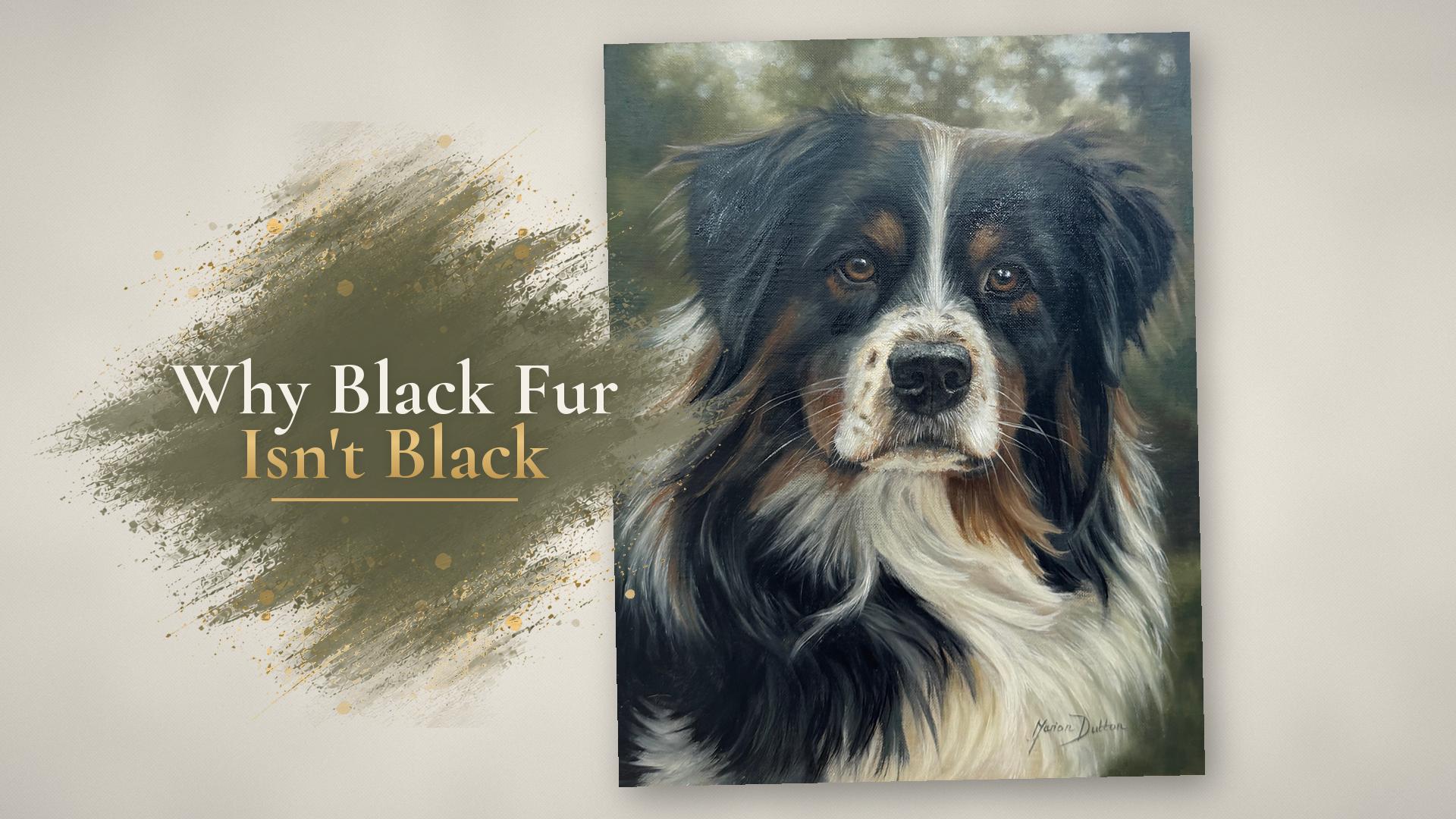
If I asked you what colours are in this border collie portrait, you'd probably say black, white and brown.
But one of the most important colours in this painting is actually green.
The background is never just background
This is the mistake a lot of painters make: seeing black and white instead of the colours that are actually influencing them. The background bounces reflected colour into everything in front of it, including fur that looks black at a glance. Here, that's all the green foliage behind him.
How I build it
I start with an underpainting in raw umber on a white panel, erasing back into the white to find the lights and lock in the structure before I ever think about colour.
Then I mix my four values: two in the light and two in the shadow. Even my darkest dark isn't black. It's yellow and a touch of teal mixed into a very dark green, so it stays in the same colour family as the foliage around it.
Try this on your next pet portrait
- Look at the background before you mix a single dark
- Mix your darkest dark from colour, not straight from a tube of black
- Keep it in the same colour family as whatever is around the animal
You can watch me paint this one on YouTube. Pet portraits are a big part of what we paint inside MazArt Academy, and it's the same method every time.
Save it for later
Want to come back to this? Pin the image below to your Pinterest board.